Nobody publishes how hard your water is.
We’ll tell you what fixes it.
Water softeners, whole-home filtration, iron and sulfur treatment and reverse osmosis drinking water across north-central West Virginia. On a town supply or on a well — and those are genuinely different jobs.
- Call for system info
- City water or well
- North-central West Virginia
- Locally owned
What the utilities publish
Zero
of them publish a hardness figure
We read the annual water quality reports for Morgantown, Fairmont, Clarksburg, Bridgeport and Buckhannon in full. Not one contains a hardness number, or an iron number, or a manganese number — hardness is not regulated, so the state's report template has no row for it.
Which means any confident figure you find online for your town did not come from your utility. So the right system depends on your home and your water: call or fill out the form, tell us what you are seeing, and we will tell you which system fits and what it costs.
What is actually in West Virginia waterWhy this matters
You already know something is off with your water
Almost nobody calls a water company because they read a water quality report. They call because of one of these four things.
Spots on everything
Glasses come out of the dishwasher cloudy. Shower doors film over a day after you clean them. That is dissolved calcium and magnesium left behind when hard water dries.
Orange or black staining
Rust-colored marks in the sink, the bath, the toilet tank, or on the laundry. That is iron, and sometimes manganese, and it is extremely common on a well in this part of the state.
A rotten-egg smell
Usually worse on the hot tap, and usually a surprise to visitors before it is a surprise to you. That is hydrogen sulfide, and a water softener on its own will not touch it.
Your water heater is dying early
Scale settles on the element and insulates it, so the heater burns more to do less. It is the most expensive thing hard water quietly does to a house.
Our systems
Built for the water you actually have
A town supply and a well are different problems. A small house and a big one are different problems. We size the system to the house and the water, not to a price list.
Not sure which one? Use the 3-step system finder →How we price it
By the home, not off a price list. What you need depends on your home and your water. Call or fill out the form and you get the number in writing before anything is booked.
Call for pricing
 Most homes start here
Whole-Home Softener + Filtration
Soft water and chlorine filtration in one tank.
Handles the two things most homes on city water deal with at once: hardness that scales your pipes, your water heater and the inside of your kettle, and the chlorine taste that comes with treated water. One tank, one valve, out of the way.
Call for pricing
 For private wells
Well Water System — Iron, Manganese and Sulfur
A well is a different problem from a town supply.
Orange staining in the bath, a metallic taste, or the rotten-egg smell when you run the hot tap are iron, manganese and hydrogen sulfide — and a water softener on its own is the wrong tool for all three. This pairs a softening tank with a filtration tank that oxidizes and strips them out before the softener ever sees the water.
Call for pricing
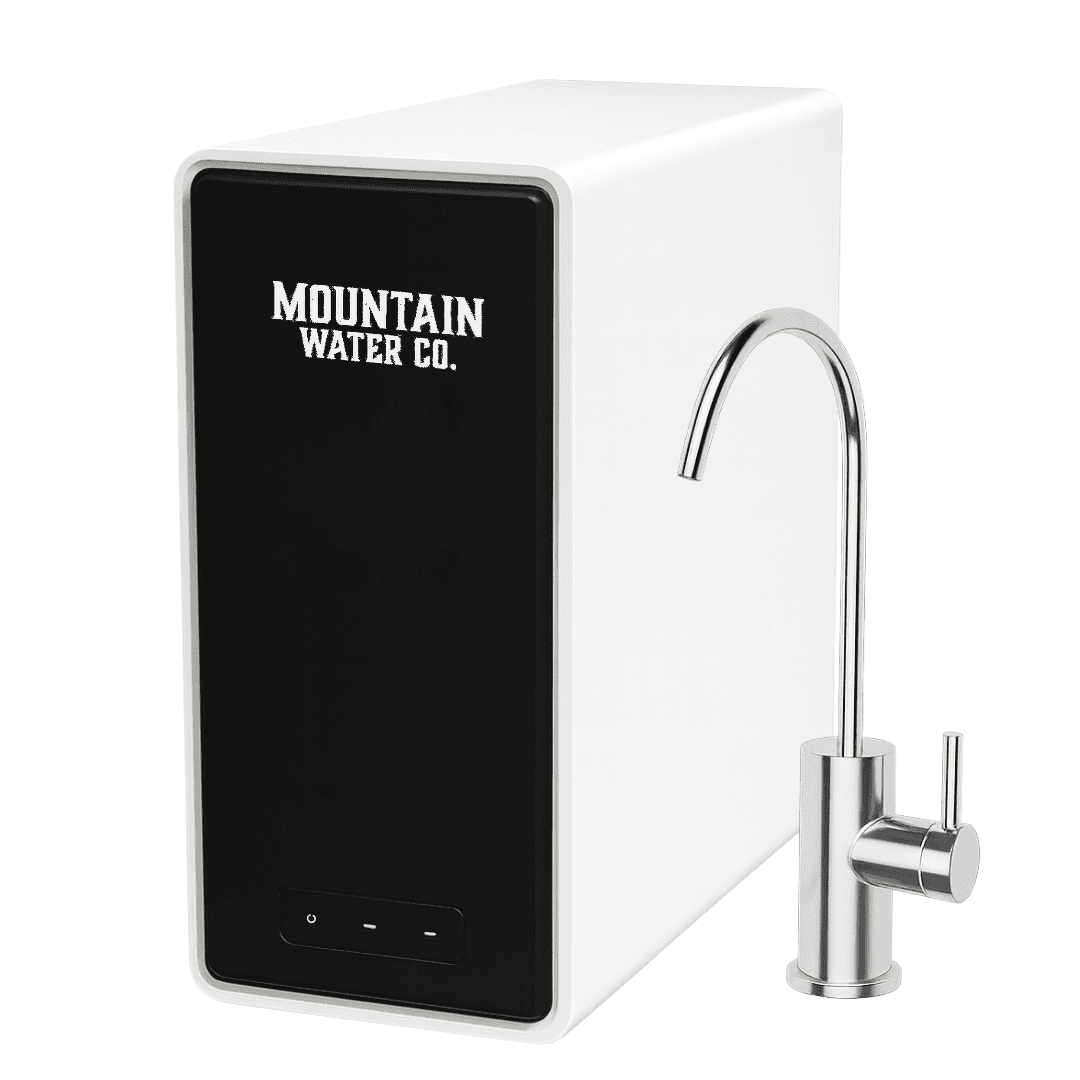
Tankless Reverse Osmosis
Drinking water from its own kitchen faucet, with no storage tank.
Reverse osmosis takes out what a whole-home system is not designed to catch. The tankless build does it without the bulky pressure tank, so it fits in a cupboard that is already full.
Call for pricing
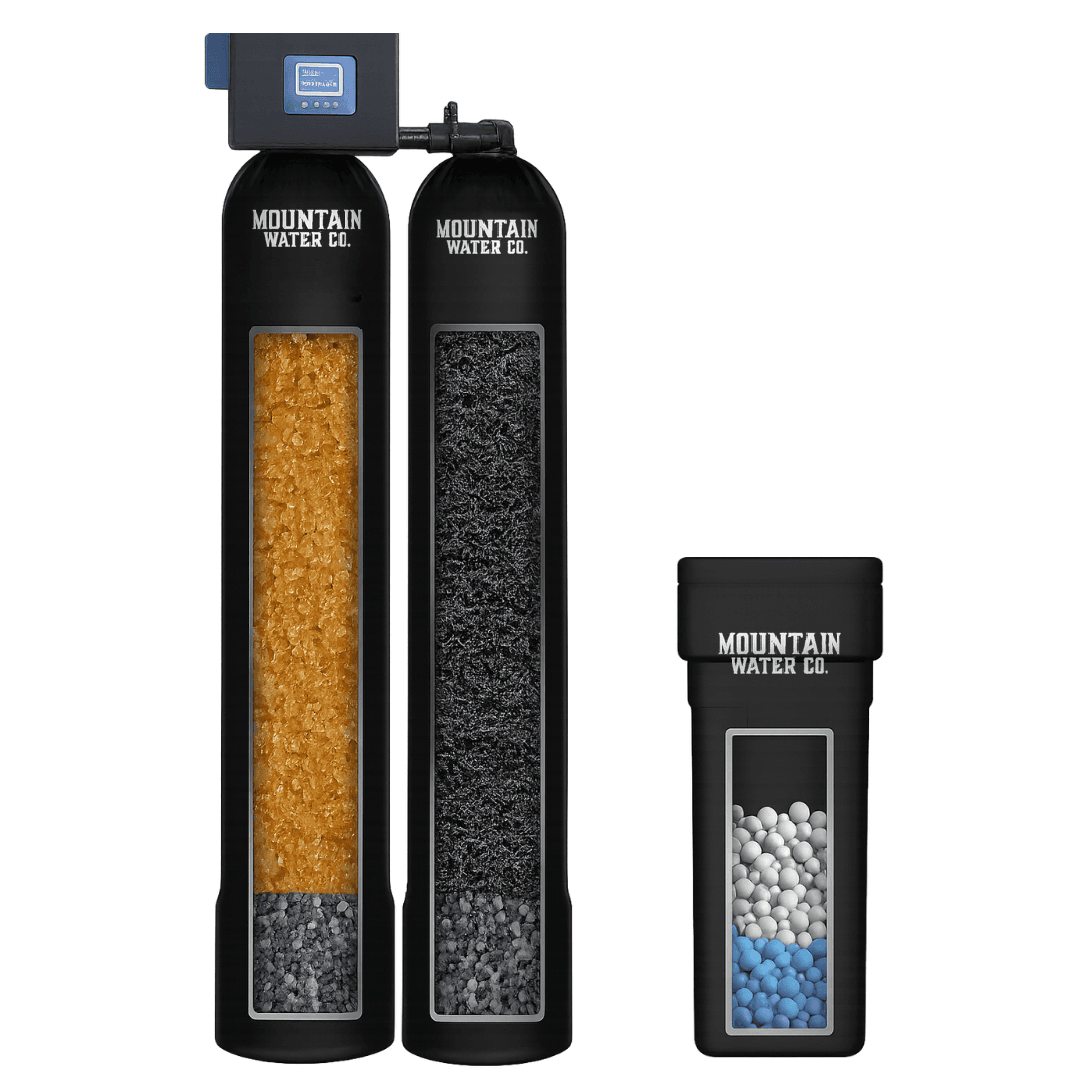
Whole Home Systems
Treats every drop entering the house — showers, laundry, dishwasher, ice maker. This is what deals with hardness, scale, chlorine, and iron or sulfur on a well.
View systemsDrinking Water Systems
Reverse osmosis in the kitchen, for the water you actually drink and cook with. Catches what a whole-home system is not built to.
View systems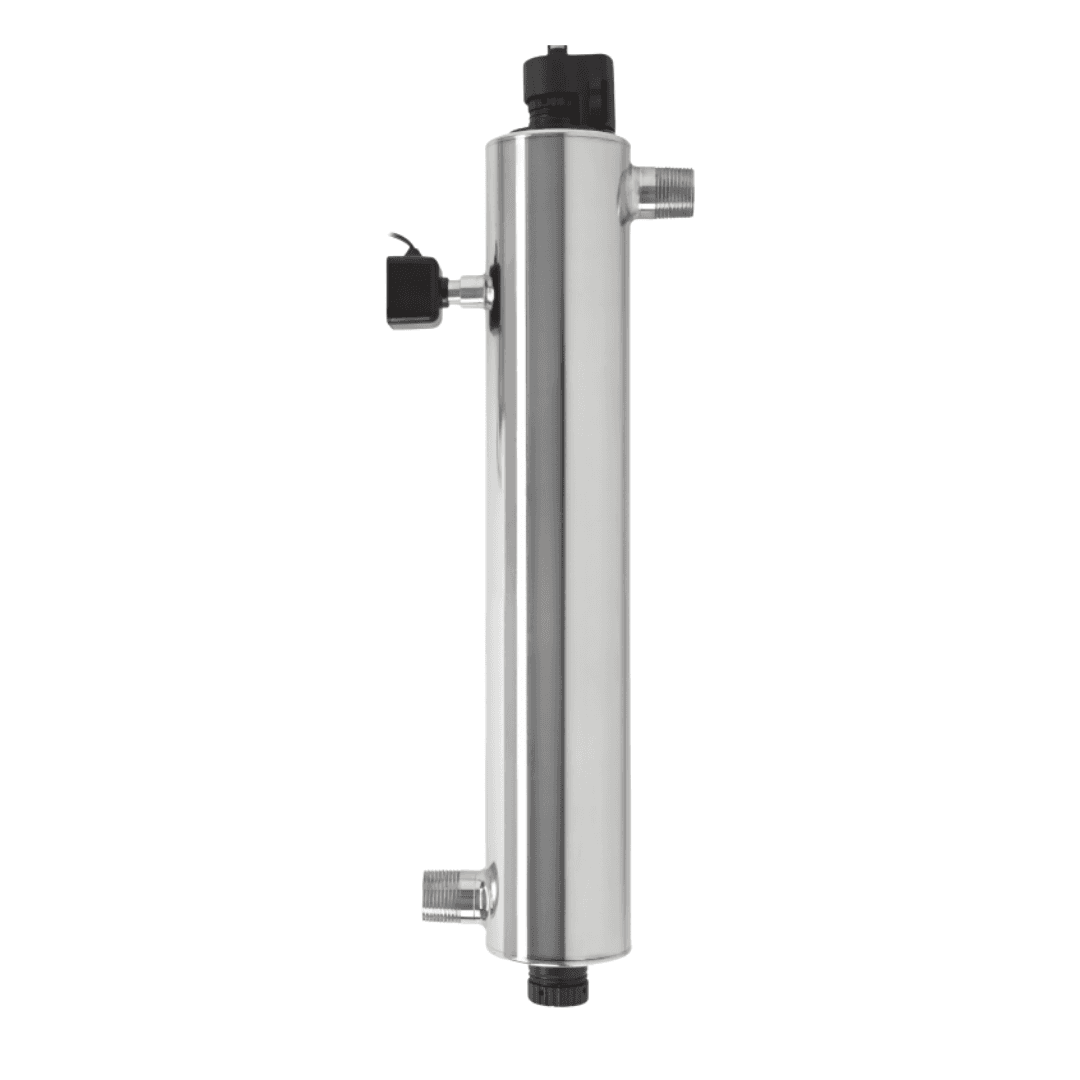
Add Ons
Extras that solve one specific problem, such as UV disinfection on a well.
View systemsHow it works
Four steps, starting with a phone call
We would rather tell you that you do not need a system than sell you the wrong one. For a new company that is not a slogan, it is the only way to get a second customer.
- 1
Call or fill out the form
(304) 435-9812, or the form on this page. Tell us whether you are on city water or a well, and what you are seeing - scale, stains, a smell, a taste.
- 2
We tell you which system fits
Hardness, iron, manganese, sulfur, chlorine - in plain terms, what is behind what you are seeing and which system deals with it.
- 3
We tell you what it costs
For the right system for your water, the size of your household, and where the equipment can physically go. Not for what we would most like to sell.
- 4
We fit it and we show you how it runs
Including what the upkeep actually is. On a softener that is salt; on a well system it is more than that, and you should know before you buy, not after.
Why this market is different
What is in the water here depends on where “here” is.
Five towns here, five different answers. Morgantown Utility Board treats water from the Monongahela River. Fairmont treats the Tygart Valley River. Clarksburg treats the West Fork, and Bridgeport has no plant of its own — it buys Clarksburg's finished water. Buckhannon treats the Buckhannon River. Every one of them is surface water, and they are not the same water.
When USGS last measured hardness in these rivers the differences were large and they have never been published since: the Tygart Valley at Colfax came back soft at a median of 36 mg/L, while the Monongahela at Star City was moderately hard at 110 — figures from 1960 to 1981, so treat them as history rather than as today's reading.
Off the mains it changes completely. In Lewis County 30 percent of people are on a private well, and in Upshur 28 percent, against about 5 percent in Monongalia and Marion. USGS sampling of wells across these five counties since 1996 found hardness anywhere between 13 and 339 mg/L, iron above the federal secondary standard in 57 percent of West Virginia groundwater samples and manganese in 62 percent.
And this is old coal country. USGS measured wells downgradient of reclaimed mines at roughly double the hardness and ten times the iron of wells in unmined ground — though it also found the effect largely disappears beyond about a thousand feet, and in wells deeper than 150 feet.
So there is no number anyone can honestly give you for your house off a map. That is not a sales line, it is the state of the published record. The right system depends on your home and your water — call or fill out the form, tell us what you are seeing, and we will tell you which system fits and what it costs.
No water system here publishes a hardness figure
The 2026 Consumer Confidence Reports for Morgantown Utility Board, Fairmont, Clarksburg, Bridgeport and Buckhannon, read in full, Oct 2026
It is free chlorine here, not chloramine
EPA Safe Drinking Water Information System, treatment records for WV, retrieved 28 Oct 2026
Every town supply here is river water, and they are different rivers
Each system's 2026 Consumer Confidence Report, and EPA SDWIS source codes, Oct 2026
USGS well samples here ranged from 13 to 339 mg/L — the spread is the point
USGS data via the National Water Quality Portal, Monongalia, Marion, Harrison, Lewis and Upshur counties, 1996–2021, retrieved Oct 2026
Iron and manganese are the documented problem in West Virginia wells
USGS Scientific Investigations Report 2012-5186, Groundwater Quality in West Virginia 1993–2008
Where we work
North-central West Virginia, out of Morgantown
Monongalia, Marion, Harrison, Lewis and Upshur, from Morgantown down to Weston and Buckhannon.
Questions
The things people ask
Anything not covered here, just call. There is no phone tree.
How hard is the water in Morgantown, Fairmont or Clarksburg?
Nobody publishes it. We read all five annual water quality reports for this area and not one of them contains a hardness figure — hardness is not a regulated contaminant, so the state's report template has no row for it. Any confident grains-per-gallon number you find online for your town did not come from your water utility. What is published is the source: Morgantown treats Monongahela River water, Fairmont treats the Tygart Valley River, and Clarksburg treats the West Fork, with Bridgeport buying Clarksburg's finished water. Those are three different rivers, so one answer could not cover them anyway. Call or fill out the form, tell us what you are seeing at home, and we will tell you which system fits and what it costs.
Does my water have chloramine in it?
Almost certainly not. EPA's treatment records list free chlorine for every system in this area and no chloramination at any of them, and chloramine appears in only one of nearly 5,000 treatment records in the whole state — at a system in the eastern panhandle. It is worth knowing because free chlorine comes out with ordinary activated carbon. If somebody tries to sell you a more expensive catalytic carbon system on the grounds that you have chloramine, they are describing a different market.
I am on a well. What should I actually be worried about?
Iron and manganese, first. In the USGS survey of West Virginia groundwater, iron was over the federal secondary standard in 57 percent of samples and manganese in 62 percent. Those are what stain a bath orange and laundry gray. Hardness second, and it varies enormously — USGS wells in these five counties have come back anywhere from 13 to 339 mg/L. If you are near old mine workings it is worth a closer look: USGS found roughly double the hardness and around ten times the iron in wells downgradient of reclaimed mines, though it also found the effect mostly gone beyond a thousand feet and in wells deeper than 150 feet. Bacteria is the other one, and it needs a lab to check.
Is hard water dangerous?
No. Hard water is a nuisance, not a health hazard, and we are not going to tell you otherwise. It shortens the life of water heaters, spots glassware, stiffens laundry and leaves soap on your skin. Anybody selling you a softener on the basis that hard water is making your family ill is selling through fear.
Is the tap water here safe to drink?
The systems serving this area treat to federal drinking water standards and publish their results every year, and on the most recent reports they are in compliance. Meeting the legal standard is a different question from tasting good or being kind to your plumbing, and those are the problems we actually solve. We are not in the business of telling you your town's water is unsafe.
Will a water softener fix the rotten-egg smell or the orange staining?
Not on its own, and this is the most common mistake we expect to have to correct. A softener uses ion exchange to remove calcium and magnesium. Iron, manganese and hydrogen sulfide are different problems needing a filtration stage ahead of the softener — put a softener in front of a well with real iron in it and you will foul the resin and be disappointed. Which stages you need depends on your well and what you are seeing — call or fill out the form and we will tell you.
How do I find out which system I need, and what it costs?
Call us at (304) 435-9812 or fill out the form. Tell us whether you are on city water or a well and what you are seeing — scale, staining, a smell, a taste — and we will tell you which system fits your home and what it costs. If it sounds like you do not need anything, we will say so — for a new company a customer who felt sold to is worse than no customer at all.
System info and pricing
Find the right water system
Call or fill out the form and tell us what you're seeing — scale, stains, a smell, city water or a well. We'll tell you which system fits your home and what it costs. There's no system that fits every house, and sometimes the answer is that you don't need one.
- Call or fill out the form
- City water or private well
- Monongalia, Marion & Harrison